
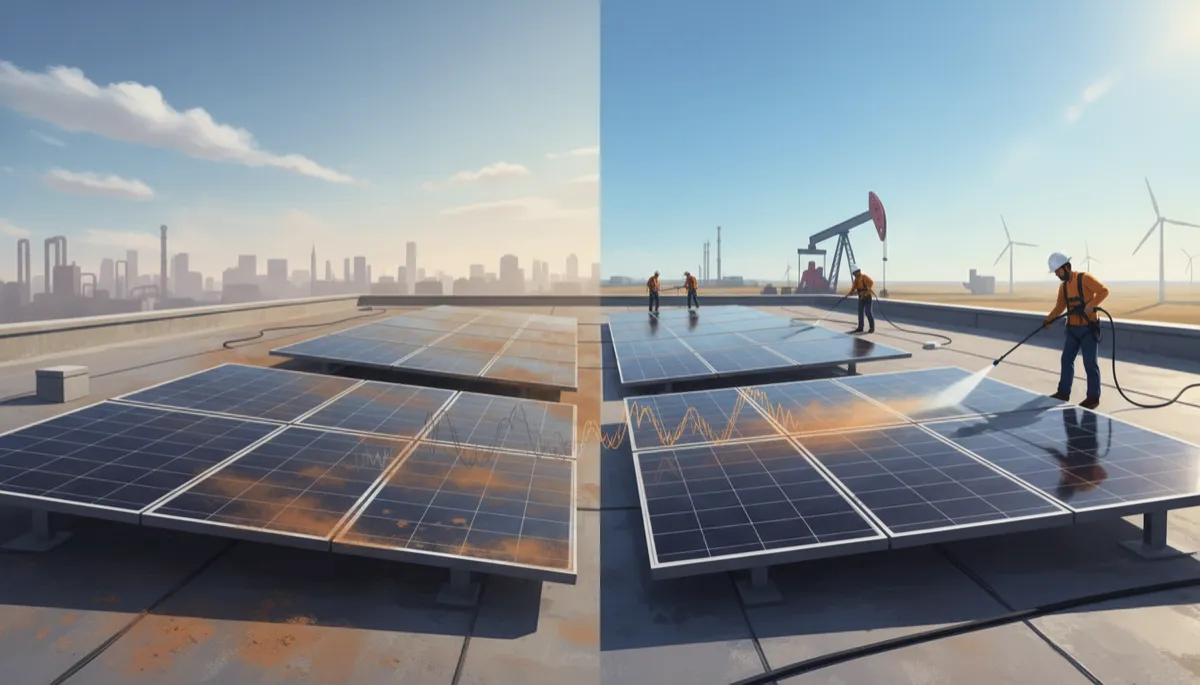
Why Soiled Solar Panels Quietly Erode Energy Output
Energy, Solar Panel Cleaning
For businesses, public agencies, and O&M teams across the Mid-Atlantic and Texas/Oklahoma, dirty modules are more than a cosmetic issue. Soiled arrays silently chip away at production, revenue, and performance guarantees—making timely, professional Solar Panel Cleaning a strategic maintenance decision, not an optional extra.
How Soiling Quietly Steals Energy from Your Solar Investment
Solar arrays in the Mid-Atlantic and in Texas/Oklahoma operate in very different climates, but they share one challenge: persistent soiling. Pollen, dust, agricultural debris, industrial emissions, and bird droppings all form a thin, uneven film on glass surfaces. That film scatters and absorbs sunlight before it reaches the cells, translating directly into lost kilowatt-hours.
For many commercial and industrial systems, even a conservative 3–5% soiling loss over months can mean tens of thousands of kilowatt-hours never produced. In high-dust or high-pollen seasons, losses can climb significantly higher. Because the drop in output is gradual, it often hides inside normal production variability, masking the true impact until a professional Solar Panel Cleaning resets performance and reveals the gap in your data.
Mid-Atlantic vs. Texas/Oklahoma: Different Environments, Same Problem
In the Mid-Atlantic, O&M teams battle heavy spring pollen, leaf debris, and urban grime. Arrays near highways, ports, or industrial corridors accumulate soot and fine particulates that rain alone rarely removes. Humid conditions help dust stick, and repeated wet/dry cycles can bake contaminants onto the glass, making them harder to dislodge without professional equipment.
In Texas and Oklahoma, the story is dominated by dust, windblown soil, and agricultural activity. Long dry stretches, frequent construction, and unpaved access roads create a steady film of particulates. When rare rainstorms hit, they can leave muddy streaks and mineral spots rather than delivering the “free wash” many asset owners count on. For ground-mount systems near fields or oil and gas operations, the soiling rate can be aggressive enough to justify multiple Solar Panel Cleaning cycles each year.
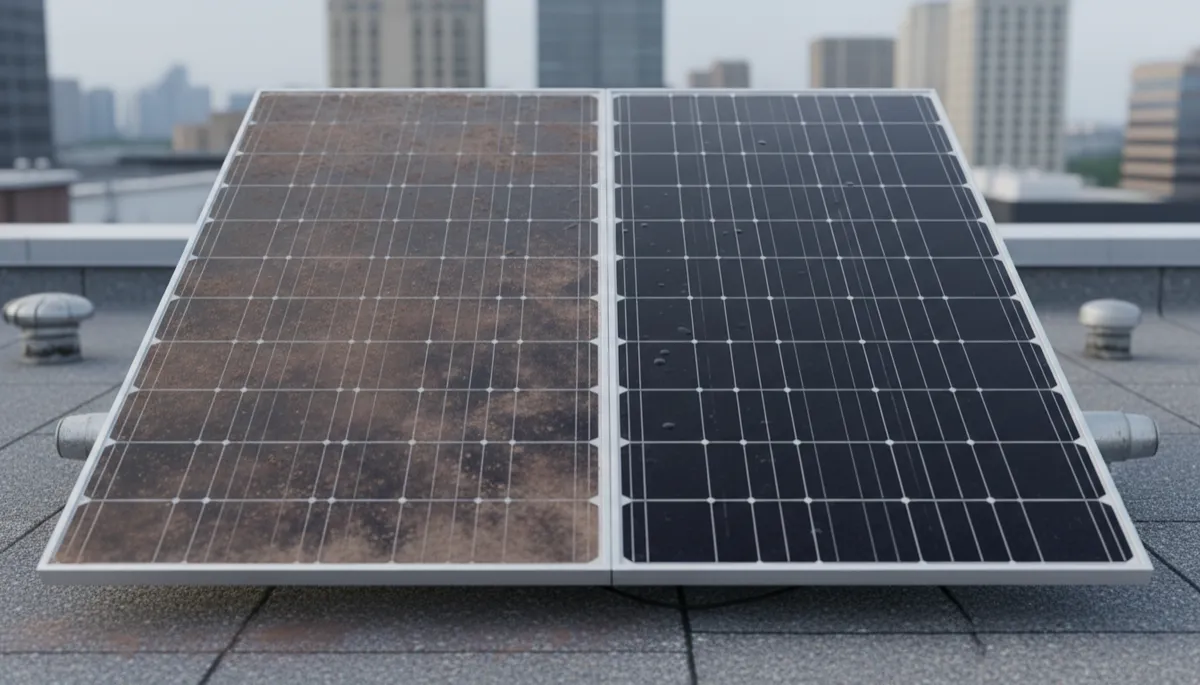
Even a thin layer of dust can cut energy yield enough to impact annual ROI.
The Hidden Financial and Operational Costs of Soiled Panels
For businesses and agencies, lost production shows up in multiple ways. Reduced output can:
Erode projected utility savings or PPA revenue, stretching payback periods beyond original models.
Make it harder to hit sustainability and carbon reduction targets tied to solar performance.
Trigger underperformance flags in monitoring platforms, requiring O&M investigations that ultimately trace back to soiling.
Over time, heavy soiling can also create hot spots as shaded cells work harder, potentially stressing components and contributing to premature degradation. While Solar Panel Cleaning is primarily about recovering energy yield, it can also support long-term asset health by keeping thermal loading more uniform across the array.
Why Professional Solar Panel Cleaning Beats DIY Approaches
Many commercial and industrial owners consider handling cleaning in-house with maintenance staff, hoses, or basic brushes. While well intentioned, this approach can introduce new risks: micro-scratches from abrasive tools, mineral deposits from hard water, or safety incidents on rooftops and elevated structures. Any damage to the anti-reflective coating can permanently reduce output—exactly what cleaning is meant to prevent.
Professional Solar Panel Cleaning providers use deionized or purified water, soft-bristle or rotating brush systems, and methods approved by module manufacturers. Crews are trained in fall protection and site safety, which is especially important for municipal facilities, schools, warehouses, and industrial plants with strict safety protocols. For O&M teams, partnering with a specialist turns cleaning into a controlled, documented service rather than an ad-hoc task.
💡 Pro Tip: Ask your Solar Panel Cleaning provider to coordinate before and after performance checks so you can quantify the production gain and refine your cleaning schedule.
Building a Data-Driven Cleaning Strategy for Your Portfolio
For asset owners and O&M teams, the goal is not to clean as often as possible, but to clean when the value of recovered energy clearly outweighs the service cost. That requires tracking performance trends, understanding local soiling drivers, and working with a Solar Panel Cleaning partner who can help interpret the data. Many portfolios find an annual baseline cleaning, supplemented by seasonal or event-based cleanings after pollen spikes, dust storms, or nearby construction, delivers the best balance of cost and benefit.
Mid-Atlantic portfolios may prioritize spring and late-summer cleanings to address pollen and organic debris, while Texas/Oklahoma assets might focus on pre-summer and post-harvest cycles to combat dust and agricultural soiling. In both regions, large flat roofs, carports, and ground-mounts near busy roads are prime candidates for more frequent service, while cleaner suburban or rural sites might stay on a lighter schedule.
When to Schedule Your Next Professional Cleaning
If your monitoring data shows a gradual decline in performance that cannot be explained by weather, shading, or equipment issues, soiling is a strong suspect. A single professional Solar Panel Cleaning visit can serve as a diagnostic step: if output rebounds noticeably, you have a clear business case for a recurring program. For businesses and agencies managing tight budgets, that measurable uplift makes it easier to justify cleaning as a standard line item in O&M planning.
Ultimately, soiled solar panels are a quiet but persistent drag on the performance of commercial and industrial systems. By treating Solar Panel Cleaning as a planned, professional service—tailored to Mid-Atlantic or Texas/Oklahoma site conditions—O&M teams and asset owners can protect energy yield, safeguard ROI, and keep their solar investments delivering at the level stakeholders expect. Ready to see what soiling is costing your site? Request a Site Assessment and we'll evaluate your array's condition and build a cleaning plan suited to your region.
